
Hearing
loss can significantly impact quality of life, but advances in medical technology
offer hope. At Tree Top Hospital, we are committed to helping patients explore
cutting-edge solutions. One such breakthrough is the cochlear implant, a device
designed for those who cannot hear well enough with traditional hearing aids.
A
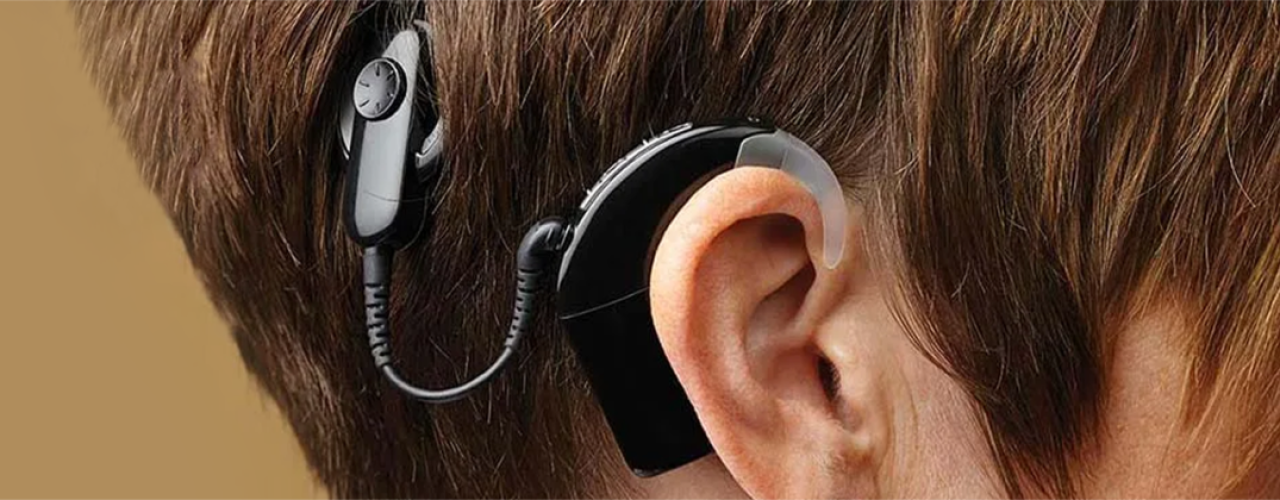
cochlear implant system consists of two main parts: external components worn
behind the ear or on the body, and an internal component surgically placed
under the skin. The microphone captures sound from the environment, and the
speech processor selects and digitizes those sounds into electric signals. A
transmitter or coil, held by a magnet on the scalp, sends these signals to the
internal component. Inside, the receiver or stimulator converts the signals
into electric impulses, and the electrode array delivers those impulses
directly to the auditory nerve inside the cochlea.
Who
Is a Candidate?
Cochlear
implants are designed for adults and children who cannot hear well enough with
traditional hearing aids.
Adults
Typically
experience significant hearing loss in both ears and struggle with phone
conversations or understanding speech in noisy environments.
Children
Infants
as young as 7 months may receive implants to facilitate speech and language
development.
Conditions
Treated
Severe
to profound sensorineural hearing loss, where inner ear hair cells are damaged.
The
Surgical Procedure & Activation
The
surgery is a safe, routine, and typically outpatient procedure performed under
general anesthesia.
Surgery
A
small incision is made behind the ear. The surgeon places the internal
receiver/stimulator in a pocket under the skin and threads the electrode array
into the cochlea.
Activation
Approximately
three to four weeks after surgery, an audiologist activates the device and
programs the speech processor to fit the patient’s specific hearing needs.
Benefits
& Outcomes
- While
a cochlear implant does not restore "normal" hearing, it provides a
useful representation of sounds. Many users experience:
- Significant
improvement in speech and word recognition
- Ability
to understand conversations without lip-reading
- Improved
telephone use
- Enhanced
quality of life, including better social interactions and improved educational
outcomes for children.
However,
a cochlear implant is not a quick fix. Success depends heavily on follow-up
care and rehabilitation. Users need to train their brains to interpret new
sounds through auditory rehabilitation, and in some cases, speech therapy. This
is a long-term commitment.
Regarding
risks, cochlear implant surgery is generally safe, with a less than three
percent infection rate. Other potential risks include damage to remaining
hearing, dizziness or tinnitus (ringing in the year), and—very rarely—facial
paralysis.
If
you are considering a cochlear implant, it is recommended to speak with an
audiologist or an Ear, Nose, and Throat (ENT) specialist for a comprehensive
evaluation.
Contact
Us Today
+960
335 1610
info@treetophospital.com